Trending...
- 450 Million Revenue Run Rate, Global Telecom Reach and a New Digital Growth Opportunity Take Center Stage: IQSTEL, Inc. (N A S D A Q: IQST)
- Canada's First Data Lakehouse Goes Global in Banking: Nabil Bank Becomes Nepal's First Bank to Implement a True Agentic Lakehouse Platform, DataNature
- RAS AP Consulting Releases Educational Resource to Help Organizations Prepare for IRS FIRE-to-IRIS Transition
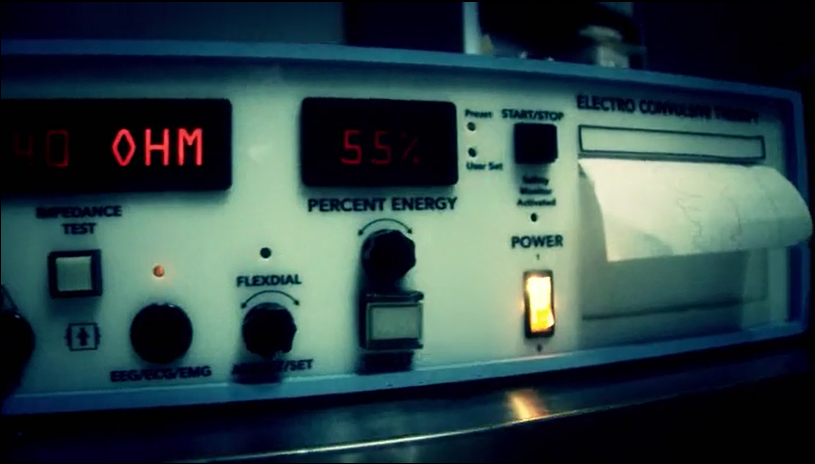
The mental health industry watchdog, CCHR, says informed consent is breached every time patients are not warned of the brain damage, long-term memory loss, and cardiac risks, including death, associated with electroshock, per the study.
LOS ANGELES - ncarol.com -- A new study has determined that as many as 1 in 15 people who receive electroshock treatment face life-threatening heart problems, which can lead to death. John Read, Ph.D., a Professor of Psychology at the University College of London critiqued studies of electroconvulsive therapy (ECT) and cited a 2019 review that he says misrepresented data and falsely asserted that ECT is safe. In reality, cardiac events are the leading cause of death for those subjected to shock treatment.[1] The Citizens Commission on Human Rights International, a mental health industry watchdog, says this critical information must be transparently communicated to patients recommended for ECT, including the risks of permanent brain damage and memory loss. According to Dr. Read's study, "the ethical principle of informed consent is being routinely breached by ECT psychiatrists."
Jan Eastgate, President of CCHR International, says that for decades there has been a cover-up of the seriousness of the effects of ECT, which sends up to 460 volts of electricity through the brain, causing a grand mal seizure. "Electroshock has no place in mental health treatment and should be banned," she said, adding, "Given without a patient's consent is internationally recognized as constituting torture."
According to U.S. expert, Ken Castleman, a biomedical engineer, "ECT stimulates the sympathetic nervous system, which controls many aspects of cardiovascular function. The powerful electrical discharge causes a spike in blood pressure. The intense stress that the ECT-induced seizure places on the heart increases the risk of adverse cardiovascular events, especially in patients who have pre-existing cardiac conditions."
More on ncarol.com
Dr. Read reports, "The obligation to ensure informed consent is a core ethical principle of all health and mental health professionals." Yet, "Various official reports, most psychiatric textbooks, and many patient information leaflets have claimed, for decades, that the risk of death from ECT is so rare as to be inconsequential," including an American Psychiatric Association (APA) ECT Task Force Report on ECT. "It should be noted that six of the eight task force members were directors of ECT services." The group included three members who were financially involved with companies manufacturing ECT machines, Dr. Read wrote.
Citing the 2023 joint guidance by the World Health Organization/United Nations, Dr. Read continued: "People being offered ECT should be made aware of all its risks and potential short- and long-term harmful effects, such as memory loss and brain damage. ECT is not recommended for children, and this should be prohibited through legislation."
The study further discusses the death rate:
More on ncarol.com
In the U.S., adolescents and even children five years old and younger have been electroshocked. Dr. Read found "rates of memory deficits in more than two-thirds of child and adolescent ECT patients" that were passed off as "acceptable" and misrepresented as a "high level of safety." Dr. Read wrote to the journal stating: "The use of sufficient electricity, once, on a developing brain, in order to cause a seizure in that young brain, is a very serious matter. To do so five or six times in a few weeks is almost bound to cause brain damage in a significant number of recipients. The average age of these youngsters was just 15.5 years. Most (62 %) were girls. When even the psychiatrists themselves acknowledge that 69 % have impaired memories as a result, this does not indicate a treatment with a 'high' degree of safety."
The main cardiac events Dr. Read found are myocardial infarction (heart attack), life-threatening arrhythmia (irregular heartbeat), acute pulmonary edema (fluid on the lungs), pulmonary embolism (blood clots), acute heart failure, and cardiac arrest.
In light of these grave risks, CCHR welcomes the recent news that electroshock is nearly on the brink of disappearing due to public awareness campaigns, including CCHR's documentary, Electroshock: Therapy or Torture. "It's an incredible story that goes back decades," says Harold Sackeim, a psychologist and major proponent of ECT, who is worried that exposure of ECT could be "successful at killing an industry."
Ms. Eastgate responds, "It is far better that the multi-billion-dollar electroshock industry be killed off rather than its patients. Their safety must be the priority. The current study and many others reflect the ongoing concerns that ECT should be banned."
About CCHR: Established in 1969 by the Church of Scientology and professor of psychiatry, Dr. Thomas Szasz, CCHR has secured state bans of ECT use on minors. It also had Deep Sleep Treatment (DST), which includes ECT, banned in Australia, which last year the WHO said should be prohibited worldwide.
Source:
[1] Read, J. 2024. Major adverse cardiac events and mortality associated with electroconvulsive therapy: Correcting and updating a 2019 meta-analysis. Ethical Human Psychology and Psychiatry, repository.uel.ac.uk/item/8xyx0
Jan Eastgate, President of CCHR International, says that for decades there has been a cover-up of the seriousness of the effects of ECT, which sends up to 460 volts of electricity through the brain, causing a grand mal seizure. "Electroshock has no place in mental health treatment and should be banned," she said, adding, "Given without a patient's consent is internationally recognized as constituting torture."
According to U.S. expert, Ken Castleman, a biomedical engineer, "ECT stimulates the sympathetic nervous system, which controls many aspects of cardiovascular function. The powerful electrical discharge causes a spike in blood pressure. The intense stress that the ECT-induced seizure places on the heart increases the risk of adverse cardiovascular events, especially in patients who have pre-existing cardiac conditions."
More on ncarol.com
- Tek84 Unveils New Brand Identity Built to Magnify What Security Officers Can Do
- CoreVar Announces Cooking with AI, an Eight-Topic Live Webinar Series
- Mr Hospital Bed Cites Hill Rom Hospital Bed Models Best Value Home Care Hospital Beds 2026
- WOWX labs Closes US$10 Million Founder-Led Growth Financing as WOWX.market Enters Scale Phase
- BESTBUYSTORE opens its dropshipping model to independent merchants
Dr. Read reports, "The obligation to ensure informed consent is a core ethical principle of all health and mental health professionals." Yet, "Various official reports, most psychiatric textbooks, and many patient information leaflets have claimed, for decades, that the risk of death from ECT is so rare as to be inconsequential," including an American Psychiatric Association (APA) ECT Task Force Report on ECT. "It should be noted that six of the eight task force members were directors of ECT services." The group included three members who were financially involved with companies manufacturing ECT machines, Dr. Read wrote.
Citing the 2023 joint guidance by the World Health Organization/United Nations, Dr. Read continued: "People being offered ECT should be made aware of all its risks and potential short- and long-term harmful effects, such as memory loss and brain damage. ECT is not recommended for children, and this should be prohibited through legislation."
The study further discusses the death rate:
- Of 8,148 ECT recipients in Texas, seven died within 2 days of their last ECT. Even excluding the two that the researchers believed were "unlikely to have been related to ECT," this is a "rate of 1 per 1,630 people. If one includes the additional eight that died, from 'cardiac events' in the following 12 days, the rate is 1 per 627."
- A 2019 review of 43 ECT studies with mortality data, including more than 75,000 patients, calculated, "All-cause mortality was 0.42 deaths per 1,000 patients." This is 1 per 2,380 people, more than four times greater than the official position of the APA of 1 per 10,000.
- A 2023 Swedish register-based study was comprehensive in finding that of 20,225 ECT patients, 123 (0.61%) died of "medical causes" within 30 days of their last ECT—one death per 164 people. At one per 413 patients, the 49 cardiac-related deaths represented the most common medical cause of post-ECT death (40%). This was surpassed only by the 93 suicides (1 per 217). In total, 15 of the 23 patients who died within 24 hours of ECT were cardiovascular deaths.
More on ncarol.com
- America's Hometown Thanksgiving Parade in Plymouth, MA, on Saturday, November 21, 2026
- Navigating a Changing Market: How AIX Group Is Responding to a Challenging Year
- 450 Million Revenue Run Rate, Global Telecom Reach and a New Digital Growth Opportunity Take Center Stage: IQSTEL, Inc. (N A S D A Q: IQST)
- Wave Helicopters Takes FLIBS 2026 to New Heights
- Canada's First Data Lakehouse Goes Global in Banking: Nabil Bank Becomes Nepal's First Bank to Implement a True Agentic Lakehouse Platform, DataNature
In the U.S., adolescents and even children five years old and younger have been electroshocked. Dr. Read found "rates of memory deficits in more than two-thirds of child and adolescent ECT patients" that were passed off as "acceptable" and misrepresented as a "high level of safety." Dr. Read wrote to the journal stating: "The use of sufficient electricity, once, on a developing brain, in order to cause a seizure in that young brain, is a very serious matter. To do so five or six times in a few weeks is almost bound to cause brain damage in a significant number of recipients. The average age of these youngsters was just 15.5 years. Most (62 %) were girls. When even the psychiatrists themselves acknowledge that 69 % have impaired memories as a result, this does not indicate a treatment with a 'high' degree of safety."
The main cardiac events Dr. Read found are myocardial infarction (heart attack), life-threatening arrhythmia (irregular heartbeat), acute pulmonary edema (fluid on the lungs), pulmonary embolism (blood clots), acute heart failure, and cardiac arrest.
In light of these grave risks, CCHR welcomes the recent news that electroshock is nearly on the brink of disappearing due to public awareness campaigns, including CCHR's documentary, Electroshock: Therapy or Torture. "It's an incredible story that goes back decades," says Harold Sackeim, a psychologist and major proponent of ECT, who is worried that exposure of ECT could be "successful at killing an industry."
Ms. Eastgate responds, "It is far better that the multi-billion-dollar electroshock industry be killed off rather than its patients. Their safety must be the priority. The current study and many others reflect the ongoing concerns that ECT should be banned."
About CCHR: Established in 1969 by the Church of Scientology and professor of psychiatry, Dr. Thomas Szasz, CCHR has secured state bans of ECT use on minors. It also had Deep Sleep Treatment (DST), which includes ECT, banned in Australia, which last year the WHO said should be prohibited worldwide.
Source:
[1] Read, J. 2024. Major adverse cardiac events and mortality associated with electroconvulsive therapy: Correcting and updating a 2019 meta-analysis. Ethical Human Psychology and Psychiatry, repository.uel.ac.uk/item/8xyx0
Source: Citizens Commission on Human Rights
Filed Under: Health
0 Comments
Latest on ncarol.com
- RAS AP Consulting Releases Educational Resource to Help Organizations Prepare for IRS FIRE-to-IRIS Transition
- Roots, Rhythm & Joy Invites Neighbors to Find Community Through Music
- Former Goddard Enterprises Managing Director Anthony Ali Joins STS Capital Partners as Managing Director and Partner
- Disney Streamer Network Establishes Creator Code of Conduct
- Heritage at Manalapan Announces Limited-Time Mortgage Rate Buydown on Select Quick Move-In Homes
- Good Organics Now at Pop Up Grocer NYC With October 30 Sampling Event
- KeysCaribbean Announces Temporarily Reduced Rates At Village at Hawks Cay Villas
- Commercial Manufacturing Validation Completed as November 10 FDA Milestone Approaches; Critical FDA Milestone Close: NRx Pharmaceuticals NAS DAQ: NRXP
- Electives Launches "Electives for Everyone," Making Live Expert-Led Learning Available to Every Employee
- Tax Tops the List as Wealthy Brits Plan Their Exit, La Vida Survey Finds
- KayeDinero Drops "CyberLeek" Amid GTA VI Headlines, Unveils Asheville "Barksdale" Visual
- "The Tree of Cinema" Installation Brought Film History and Its Audiences Together at TIFF 2026
- Household Staffing Named 2026 Agency of the Year by the Association of Premier Nanny Agencies
- Detroit Lawyer Steals $600,000 Settlement Meant to Protect Child
- Missing a Tooth? Chapel Hill's Everbright Dental Explains Implants, Bridges and Dentures
- Heritage at South Brunswick Announces Special Townhome Mortgage Rate Buydown
- Heritage at Hopewell Announces Limited-Time Mortgage Rate Buydown on Select Quick Move-In Townhomes
- Air Force Veteran Sean Douglas Delivers Powerful Suicide Prevention Presentations to Hundreds of Marines at Camp Pendleton
- Alvear Homes Releases Free Guide to Mecklenburg County's 2027 Property Revaluation
- Renew Integrative Health Publishes Updated Peptide Therapy Guide to Help Patients Understand Their Options