Trending...
- 450 Million Revenue Run Rate, Global Telecom Reach and a New Digital Growth Opportunity Take Center Stage: IQSTEL, Inc. (N A S D A Q: IQST)
- Canada's First Data Lakehouse Goes Global in Banking: Nabil Bank Becomes Nepal's First Bank to Implement a True Agentic Lakehouse Platform, DataNature
- Beyond Popularity Rankings, The World's No.1 Superstar® Wins Best Pop Music Video for "Under Your Spell"
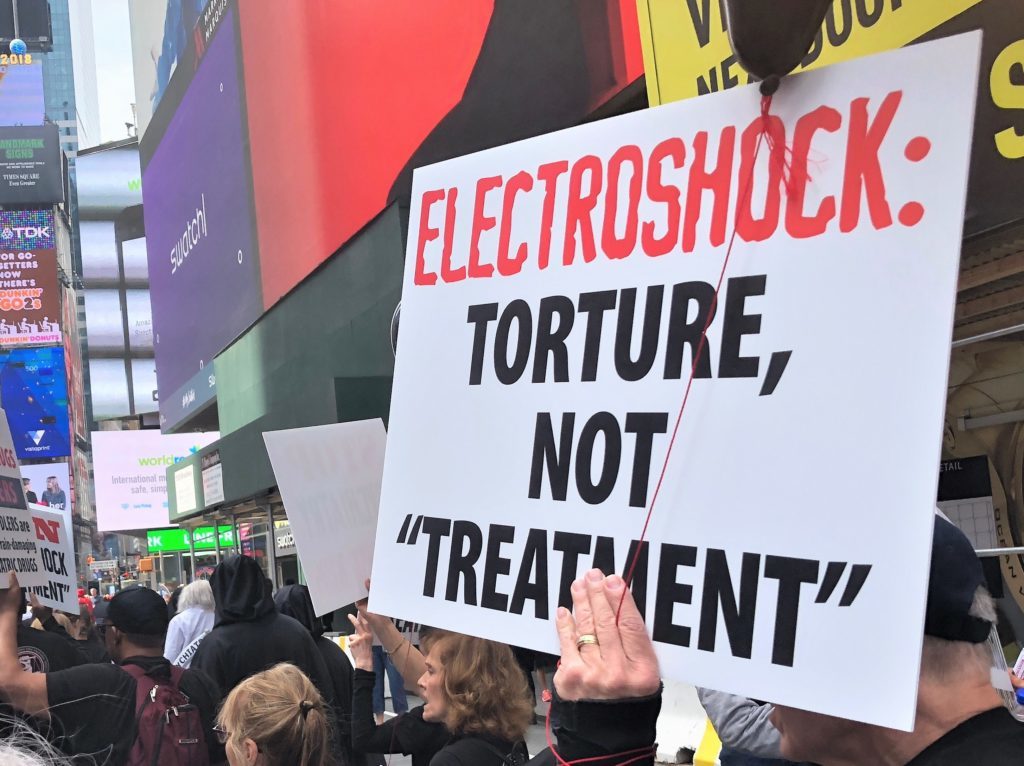
Group protests the American Psychiatric Association meeting during May's Mental Health Month, calling for legislation to define forced treatment as torture and to ban electroshock treatment.
LOS ANGELES - ncarol.com -- The Citizens Commission on Human Rights (CCHR), a mental health industry watchdog, orchestrated a march in New York City to coincide with May's Mental Health Awareness Month. Simultaneously, they unveiled an exhibit shedding light on psychiatric abuse, strategically timed with the American Psychiatric Association's (APA) annual convention in the city. CCHR is raising awareness about coercive mental health practices, such as forced institutionalization and the administration of drugs and electroshock treatment in psychiatric facilities. Specifically targeting electroshock treatment, they advocate for its ban, denouncing it as an outdated and brain-damaging procedure to which 100,000 Americans, including children, fall victim each year.
CCHR notes that the U.S. lags behind international demands to end coercive practices. The World Health Organization (WHO), United Nations Committee Against Torture, UN Office of the High Commissioner for Human Rights (OHCHR), World Psychiatric Association, and the European Psychiatric Congress have all recognized that such practices "violate the right to be protected from torture or cruel, inhumane and degrading treatment…."[1]
The WHO/OHCHR Guideline on Mental Health, Human Rights and Legislation, issued in October 2023, states that ECT without consent "may constitute torture and ill-treatment."
The U.S. has ratified the UN Convention against Torture, adopting it in domestic law, but its application does not extend to mental health laws. A Harvard Law School Project on Disability report titled, "When Does Mental Health Coercion Constitute Torture?" notes that to constitute torture, intent must be proved, meaning mental health workers' "intent to inflict severe harm."[2]
Jan Eastgate, President of CCHR International, says, "Because mental health laws empower psychiatrists to circumvent a patient's right to refuse treatment, they give license to committing intentional harm when patients are electroshocked and drugged against their will."
More on ncarol.com
In its Final Ruling on the ECT device in 2018, the Food and Drug Administration (FDA) erroneously reported that "involuntary ECT treatment is uncommon in the United States" and that in every State "the administration of ECT on an involuntary basis requires a judicial proceeding."
However, there are 33 geographical jurisdictions including the District of Columbia and Puerto Rico where the state laws and administrative codes do not comment on the use of ECT and, thereby fail to provide judicial protection.[3]
Recently, CCHR International filed Freedom of Information Act requests to states for their ECT use statistics under Medicaid, including how many are given it involuntarily. Of 22 states that responded, which did not include New York, CCHR researchers estimated that over 90% did not track ECT forced on patients.
The WHO/OHCHR Guideline highlights the "calls to consider banning ECT altogether," a stance which CCHR has long advocated for. CCHR helped achieve a ban on the use of ECT on minors in California in 1976 and in Texas in 1993 but said the practice should be prohibited entirely.
WHO/OHCHR says patients should be made aware of "potential short- and long-term harmful effects, such as memory loss and brain damage."
A sample of 12 websites of hospitals delivering ECT in New York makes no mention of brain damage as an adverse effect, despite a 2018 court case in which the judge determined: "A reasonable jury could find that the ECT device manufacturer caused Plaintiffs' brain damage through failure to warn their treating physicians of brain injury, or alternatively by failing to investigate and report allegations of brain damage and permanent memory loss to the FDA, so that information would be available to the public."[4]
A U.S. ECT device manufacturer, admits that "patients may experience permanent memory loss or permanent brain damage."[5]
However, the APA recommends brain damage be omitted from ECT consent forms.[6] ECT sends up to 460 volts of electricity through the brain to induce a grand mal seizure, and after more than 80 years of use, no one has any proven theory about how it supposedly works. "There are no long-term studies that show ECT is safe or effective. ECT can cause brain damage, permanent memory loss and neurocognitive injury," according to one law firm.[7] Studies link ECT to increasing the risk of patients committing suicide.[8]
CCHR says that consent for ECT can be skewed by psychiatrists and hospitals that profit from a $3 billion-a-year ECT industry, and is so misleading as to potentially constitute consumer fraud.
More on ncarol.com
While conceding "the exact process that underlies the effectiveness of ECT is uncertain," the New York Office of Mental Health (OMH) claims without scientific evidence: "Biological changes that result from the seizure [ECT causes] are believed to result in a change in brain chemistry which is believed to be the key to restoring normal function." [Emphasis added]
One hospital in Buffalo claims, "A controlled seizure is induced to improve the chemical pathways in the brain that effect (sic) mood and behavior." Yet another claims the electrical current "causes a mild brain seizure that can alter an individual's brain chemistry by releasing chemicals in the brain and encouraging the brain cells to make new connections…." One website asserts: "Doctors believe that the seizure activity may help the brain 'rewire' itself…."
"None of the claims are backed by scientific evidence, which grossly misleads consumers," adds Eastgate. In June 2022, a study published in Molecular Psychiatry concluded with resounding finality that there is no causal relationship between a "chemical imbalance" in the brain and depression or any mental disorder. This finding was based on an analysis of depression-related studies from the past 30 years.[9]
CCHR wants the APA and state and federal regulators to publicly support a zero-tolerance for coercive psychiatric practices and a ban on ECT.
About CCHR: CCHR was founded in 1969 by the Church of Scientology and the late Dr. Thomas Szasz, Professor of Psychiatry, State University of New York Upstate Medical University. CCHR produced a definitive documentary on electroshock, Therapy or Torture: The Truth About Electroshock.
Sources:
[1] World Health Organization, OHCHR, "Guidance on Mental Health, Human Rights and Legislation," 9 Oct. 2023, p. 15; www.cchrint.org/2023/09/18/who-guideline-condemns-coercive-psychiatric-practices/
[2] ir.lawnet.fordham.edu/ilj/vol45/iss5/2/
[3] www.jaapl.org/content/34/3/406.full.pdf
[4] truthaboutect.org/cchr-notifies-electroshock-hospitals-on-the-failure-to-inform-patients-of-risks/; lifeafterect.com/how-to-report-your-ect-injury-to-the-fda/
[5] www.thymatron.com/catalog_cautions.asp
[6] truthaboutect.org/cchr-notifies-electroshock-hospitals-on-the-failure-to-inform-patients-of-risks; www.cambridge.org/core/journals/advances-in-psychiatric-treatment/article/memory-and-cognitive-effects-of-ect-informing-and-assessing-patients/DD5C63934357779765BA7ADF308275AE
[7] www.wisnerbaum.com/defective-medical-device-injuries/ect/
[8] Peter Simons, "ECT Does Not Seem to Prevent Suicide," Mad In America, 17 Feb. 2023
[9] www.cchrint.org/2022/10/14/an-open-letter-to-the-american-psychiatric-association-2/; www.nature.com/articles/s41380-022-01661-0
CCHR notes that the U.S. lags behind international demands to end coercive practices. The World Health Organization (WHO), United Nations Committee Against Torture, UN Office of the High Commissioner for Human Rights (OHCHR), World Psychiatric Association, and the European Psychiatric Congress have all recognized that such practices "violate the right to be protected from torture or cruel, inhumane and degrading treatment…."[1]
The WHO/OHCHR Guideline on Mental Health, Human Rights and Legislation, issued in October 2023, states that ECT without consent "may constitute torture and ill-treatment."
The U.S. has ratified the UN Convention against Torture, adopting it in domestic law, but its application does not extend to mental health laws. A Harvard Law School Project on Disability report titled, "When Does Mental Health Coercion Constitute Torture?" notes that to constitute torture, intent must be proved, meaning mental health workers' "intent to inflict severe harm."[2]
Jan Eastgate, President of CCHR International, says, "Because mental health laws empower psychiatrists to circumvent a patient's right to refuse treatment, they give license to committing intentional harm when patients are electroshocked and drugged against their will."
More on ncarol.com
- What's Beneath Your Feet?: Anti-Viral Flooring Helps Create Healthier Spaces
- Control & Co. Launches Digital Audit Readiness Toolkit for Small Businesses
- Zazie Productions Brings Experimental Sound Art to Psychological Horror Film Scoring
- Tek84 Unveils New Brand Identity Built to Magnify What Security Officers Can Do
- CoreVar Announces Cooking with AI, an Eight-Topic Live Webinar Series
In its Final Ruling on the ECT device in 2018, the Food and Drug Administration (FDA) erroneously reported that "involuntary ECT treatment is uncommon in the United States" and that in every State "the administration of ECT on an involuntary basis requires a judicial proceeding."
However, there are 33 geographical jurisdictions including the District of Columbia and Puerto Rico where the state laws and administrative codes do not comment on the use of ECT and, thereby fail to provide judicial protection.[3]
Recently, CCHR International filed Freedom of Information Act requests to states for their ECT use statistics under Medicaid, including how many are given it involuntarily. Of 22 states that responded, which did not include New York, CCHR researchers estimated that over 90% did not track ECT forced on patients.
The WHO/OHCHR Guideline highlights the "calls to consider banning ECT altogether," a stance which CCHR has long advocated for. CCHR helped achieve a ban on the use of ECT on minors in California in 1976 and in Texas in 1993 but said the practice should be prohibited entirely.
WHO/OHCHR says patients should be made aware of "potential short- and long-term harmful effects, such as memory loss and brain damage."
A sample of 12 websites of hospitals delivering ECT in New York makes no mention of brain damage as an adverse effect, despite a 2018 court case in which the judge determined: "A reasonable jury could find that the ECT device manufacturer caused Plaintiffs' brain damage through failure to warn their treating physicians of brain injury, or alternatively by failing to investigate and report allegations of brain damage and permanent memory loss to the FDA, so that information would be available to the public."[4]
A U.S. ECT device manufacturer, admits that "patients may experience permanent memory loss or permanent brain damage."[5]
However, the APA recommends brain damage be omitted from ECT consent forms.[6] ECT sends up to 460 volts of electricity through the brain to induce a grand mal seizure, and after more than 80 years of use, no one has any proven theory about how it supposedly works. "There are no long-term studies that show ECT is safe or effective. ECT can cause brain damage, permanent memory loss and neurocognitive injury," according to one law firm.[7] Studies link ECT to increasing the risk of patients committing suicide.[8]
CCHR says that consent for ECT can be skewed by psychiatrists and hospitals that profit from a $3 billion-a-year ECT industry, and is so misleading as to potentially constitute consumer fraud.
More on ncarol.com
- Mr Hospital Bed Cites Hill Rom Hospital Bed Models Best Value Home Care Hospital Beds 2026
- WOWX labs Closes US$10 Million Founder-Led Growth Financing as WOWX.market Enters Scale Phase
- BESTBUYSTORE opens its dropshipping model to independent merchants
- America's Hometown Thanksgiving Parade in Plymouth, MA, on Saturday, November 21, 2026
- Navigating a Changing Market: How AIX Group Is Responding to a Challenging Year
While conceding "the exact process that underlies the effectiveness of ECT is uncertain," the New York Office of Mental Health (OMH) claims without scientific evidence: "Biological changes that result from the seizure [ECT causes] are believed to result in a change in brain chemistry which is believed to be the key to restoring normal function." [Emphasis added]
One hospital in Buffalo claims, "A controlled seizure is induced to improve the chemical pathways in the brain that effect (sic) mood and behavior." Yet another claims the electrical current "causes a mild brain seizure that can alter an individual's brain chemistry by releasing chemicals in the brain and encouraging the brain cells to make new connections…." One website asserts: "Doctors believe that the seizure activity may help the brain 'rewire' itself…."
"None of the claims are backed by scientific evidence, which grossly misleads consumers," adds Eastgate. In June 2022, a study published in Molecular Psychiatry concluded with resounding finality that there is no causal relationship between a "chemical imbalance" in the brain and depression or any mental disorder. This finding was based on an analysis of depression-related studies from the past 30 years.[9]
CCHR wants the APA and state and federal regulators to publicly support a zero-tolerance for coercive psychiatric practices and a ban on ECT.
About CCHR: CCHR was founded in 1969 by the Church of Scientology and the late Dr. Thomas Szasz, Professor of Psychiatry, State University of New York Upstate Medical University. CCHR produced a definitive documentary on electroshock, Therapy or Torture: The Truth About Electroshock.
Sources:
[1] World Health Organization, OHCHR, "Guidance on Mental Health, Human Rights and Legislation," 9 Oct. 2023, p. 15; www.cchrint.org/2023/09/18/who-guideline-condemns-coercive-psychiatric-practices/
[2] ir.lawnet.fordham.edu/ilj/vol45/iss5/2/
[3] www.jaapl.org/content/34/3/406.full.pdf
[4] truthaboutect.org/cchr-notifies-electroshock-hospitals-on-the-failure-to-inform-patients-of-risks/; lifeafterect.com/how-to-report-your-ect-injury-to-the-fda/
[5] www.thymatron.com/catalog_cautions.asp
[6] truthaboutect.org/cchr-notifies-electroshock-hospitals-on-the-failure-to-inform-patients-of-risks; www.cambridge.org/core/journals/advances-in-psychiatric-treatment/article/memory-and-cognitive-effects-of-ect-informing-and-assessing-patients/DD5C63934357779765BA7ADF308275AE
[7] www.wisnerbaum.com/defective-medical-device-injuries/ect/
[8] Peter Simons, "ECT Does Not Seem to Prevent Suicide," Mad In America, 17 Feb. 2023
[9] www.cchrint.org/2022/10/14/an-open-letter-to-the-american-psychiatric-association-2/; www.nature.com/articles/s41380-022-01661-0
Source: Citizens Commission on Human Rights
0 Comments
Latest on ncarol.com
- ASSIST Software Wins Volkswagen Challenge for Automated Quality Inspection
- National Literacy and Workforce Readiness Crisis Sparks New Program Launching in Birmingham
- New England Consulting Partners Celebrates 25 Years of Turnaround Management Solutions
- RAS AP Consulting Releases Educational Resource to Help Organizations Prepare for IRS FIRE-to-IRIS Transition
- Roots, Rhythm & Joy Invites Neighbors to Find Community Through Music
- Former Goddard Enterprises Managing Director Anthony Ali Joins STS Capital Partners as Managing Director and Partner
- Disney Streamer Network Establishes Creator Code of Conduct
- Heritage at Manalapan Announces Limited-Time Mortgage Rate Buydown on Select Quick Move-In Homes
- Good Organics Now at Pop Up Grocer NYC With October 30 Sampling Event
- KeysCaribbean Announces Temporarily Reduced Rates At Village at Hawks Cay Villas
- Commercial Manufacturing Validation Completed as November 10 FDA Milestone Approaches; Critical FDA Milestone Close: NRx Pharmaceuticals NAS DAQ: NRXP
- Electives Launches "Electives for Everyone," Making Live Expert-Led Learning Available to Every Employee
- Tax Tops the List as Wealthy Brits Plan Their Exit, La Vida Survey Finds
- KayeDinero Drops "CyberLeek" Amid GTA VI Headlines, Unveils Asheville "Barksdale" Visual
- "The Tree of Cinema" Installation Brought Film History and Its Audiences Together at TIFF 2026
- Household Staffing Named 2026 Agency of the Year by the Association of Premier Nanny Agencies
- Detroit Lawyer Steals $600,000 Settlement Meant to Protect Child
- Missing a Tooth? Chapel Hill's Everbright Dental Explains Implants, Bridges and Dentures
- Heritage at South Brunswick Announces Special Townhome Mortgage Rate Buydown
- Heritage at Hopewell Announces Limited-Time Mortgage Rate Buydown on Select Quick Move-In Townhomes